

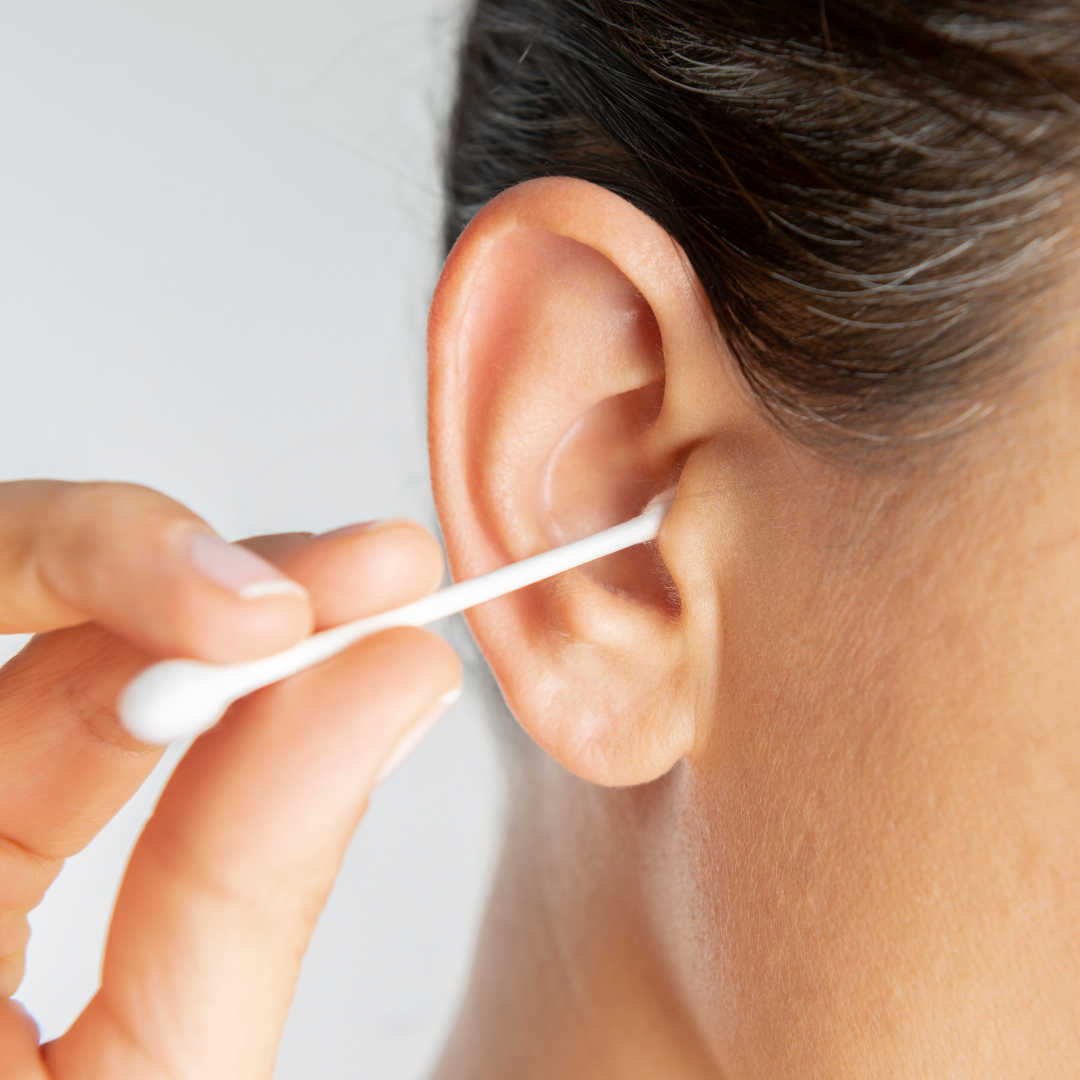
While many consider cotton swabs handy cleaning devices, placing them in the ear canal disrupts natural clearing and causes physical damage. Our audiology team evaluates whether cerumen accumulation requires clinical extraction and suggests techniques tailored to your auditory health. Ear canals typically maintain themselves without assistance; nonetheless, if stubborn buildup develops, we help individuals safely eliminate excess wax.
Clinical Reasons Why Q-Tips Damage the Ear Canal
Biologically, earwax—known clinically as cerumen—is not an unhygienic waste product. Cerumen works to entrap airborne particles, deter infectious pathogens, hydrate the auditory canal, and protect thin dermal layers. Jaw movement and normal skin migration gradually carry old wax toward the ear opening, where it flakes away or washes off during bathing.
Using a cotton swab within the ear canal halts this physiological self-cleaning function. Although the cotton may collect a small amount of wax, it often pushes the remaining material closer to the eardrum. Repeated use can pack wax into a firm blockage and create the plugged sensation that encourages even more cleaning.
You may gently utilize cotton swabs across the external auricle, but you should avoid inserting them into the internal canal.
Mechanical Trauma: Risks of Cotton Swabs in the Ear
The sensitive skin protecting the ear canal exhibits extreme thinness and scratches effortlessly. Small dermal abrasions produce soreness or light bleeding while allowing microbes to enter, raising the incidence of outer-ear infection. There is also a risk that the cotton tip will detach and become stuck deep inside the auditory canal.
Possible injuries include:
- Deep mechanical cerumen impaction
- Epithelial lacerations, inflammation, erythema, or bleeding
- Secondary bacterial otitis externa
- Retained cotton tip or foreign object obstruction
- Traumatic perforation of the eardrum
- Mechanical trauma to the middle-ear ossicles behind the eardrum
- Transient hearing reduction or permanent sensorineural loss
- Acute tinnitus, vertigo, or intense otalgia
Severe injuries are infrequent yet emerge readily if an arm is bumped, the swab slips, or the stick is driven too far.
How Often Should Earwax Get Removed?
Clinical extraction of earwax is not routinely required on a fixed schedule for most patients. Normal ears migrate cerumen toward the opening constantly, allowing routine bathing to cleanse the visible exterior. Overzealous hygiene parches canal tissue, incites chronic irritation, and increases vulnerability to bacterial infection or deep plugs.
Intervention becomes necessary whenever wax creates an anatomical blockage, obstructs otoscopic examination, disrupts hearing aid operation, or causes aural distress.
Clinical Guidance for Safe At-Home Cerumen Care
In the absence of earwax symptoms, allowing natural physiological clearance is universally the safest strategy. Gently wipe the outer ear surface with a damp washcloth and allow internal self-cleaning mechanisms to work.
When wax needs softening, we may recommend an over-the-counter cerumen-removal product or drops containing ingredients such as mineral oil, glycerin, saline, or carbamide peroxide. Follow the package directions meticulously regarding droplet quantity and consecutive days of use. Cease use at once if you experience localized pain, acute vertigo, cutaneous rash, or intensifying discomfort.
Performing home ear irrigation carries distinct risks and requires prior professional evaluation and hands-on technique instructions. Never utilize motorized oral irrigators or dental water devices in the ear canal. Avoid hazardous gadgets including ear candles, sharp metal loops, camera-assisted tools, hair clips, and home vacuum extractors. These questionable products can burn sensitive tissues, lacerate the canal, rupture the eardrum, or compact wax deeper.
Recognizing When Earwax Requires Clinical Intervention
Make an appointment when the ear remains obstructed after using softening drops, wax is tightly packed, or home methods prove unsuccessful. Professional removal is also preferable when a person cannot safely hold still, has a narrow ear canal, uses hearing aids, or has medical or surgical factors that make drops or irrigation risky.
Obtain a focused audiological evaluation for:
- Unresolved ear discomfort, persistent canal itching, or touch sensitivity
- Hemorrhagic discharge, purulent fluid, clear otorrhea, or foul-smelling drainage
- Fever combined with visible swelling or redness around the ear
- New acoustic tinnitus sounds or unstable balance sensations
- Hearing loss that develops suddenly or continues after wax removal
- Suspected tympanic membrane tears or retained cotton foreign bodies
- Repeated wax accumulation that impairs prescription hearing devices
A sudden reduction in one ear’s hearing demands emergency evaluation rather than an assumption of wax blockage. Prompt testing can distinguish a blockage from a time-sensitive inner-ear problem.
Clinical Methods for Safe Earwax Extraction
We first examine the canal with an otoscope or microscope to confirm that wax is present and look for infection, injury, or an eardrum perforation. The safest removal method depends on wax consistency, canal anatomy, medical history, previous surgery, and the patient’s ability to tolerate the procedure.
Standard clinical removal options include:
- Application of enzymatic softening drops before or during extraction
- Controlled ear flushing using warm, body-temperature water on intact eardrums
- Gentle micro-suction performed under clear binocular visualization
- Manual instrument removal utilizing specialized curettes, loops, or micro-forceps
Direct illumination and magnification enable the provider to spare sensitive canal skin and stop promptly upon patient feedback. Resolving highly compacted or dry earwax often involves integrating multiple clinical removal techniques. After removal, the ear can be reexamined to confirm that the canal and eardrum are healthy. Should sensations of fullness, tinnitus, balance issues, or hearing loss persist, comprehensive diagnostic testing will isolate the true underlying etiology.
Schedule an Expert Cerumen Removal Consultation
When your ears feel plugged or you notice auditory changes, schedule an appointment with our specialists instead of grabbing a cotton swab. We begin your evaluation with an in-depth review of symptoms, surgical ear history, hearing aid maintenance, home cleaning attempts, and individual tendencies toward wax accumulation. Connect with our practice today to reserve an appointment for safe, professional earwax removal.