

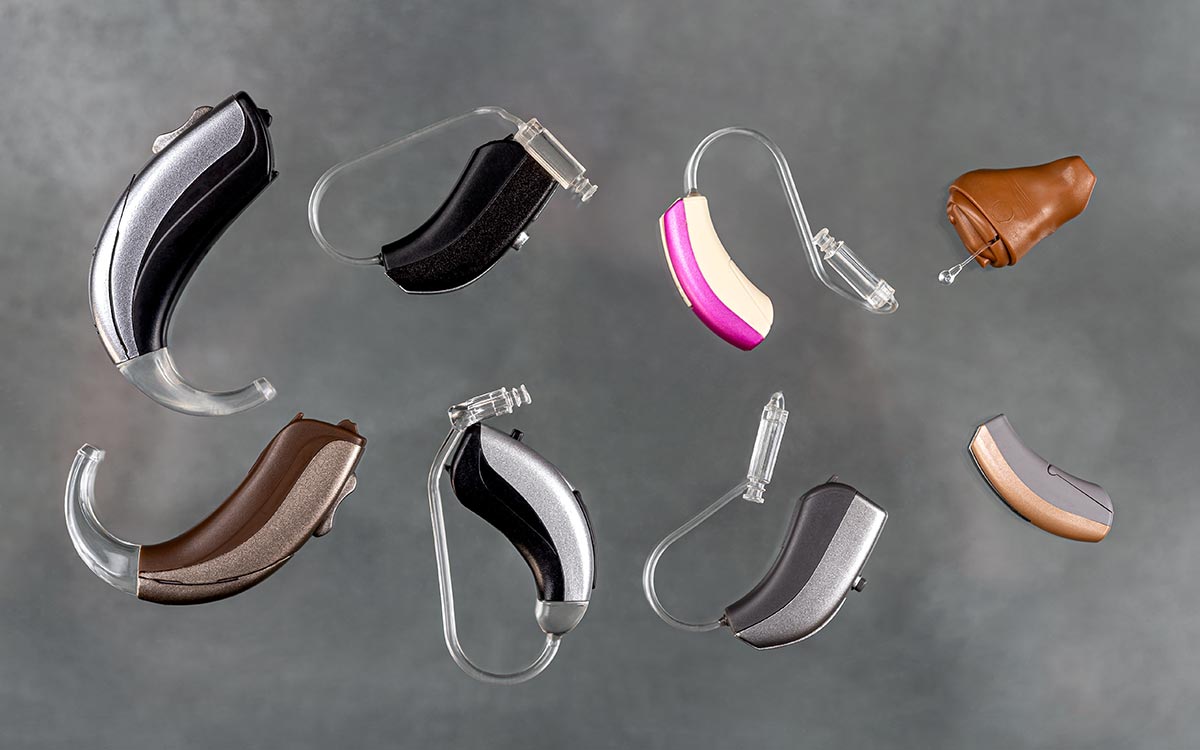
The total amount of hearing aid designs and technology levels on the market today can make the selection process feel complicated. However, a specialized hearing solution exists for every person’s singular needs and daily habits. Success rests on finding the hearing aid for hearing loss or tinnitus that suits your personal preferences.
By learning about the differences among various hearing aid models, you can move forward with greater confidence and knowledge. Today, we’re summarizing the different hearing aid styles and what makes each one unique.
Understanding ITC Models
Basic Summary:
ITC hearing aids rest partially in the ear canal, with an inconspicuous portion visible at the outer ear.
The Advantages:
- Provides an understated appearance compared to traditional styles
- Specifically contoured to the wearer’s ear for an optimal fit
- Works effectively for individuals experiencing mild hearing challenges
These devices are commonly suggested for beginners due to their effective mix of subtle design and user-friendly functions.
Ultra-Discreet Invisible-in-Canal (IIC) Devices
What they are:
IIC hearing aids are the tiniest custom style available. They rest deeply inside the ear canal and are virtually invisible when worn.
User Benefits:
- Maximum cosmetic discretion
- Microphone depth assists in mimicking the ear’s natural sound collection
- A feather-light build makes them easy to wear all day
Because of their small size, IIC devices typically work best for mild to moderate hearing loss and for those who prefer a nearly invisible option.
ITE (In-the-Ear) Model Summary
The Basics:
These models fill either the full or bottom half of the outer ear bowl. These are custom-fabricated for a precise fit based on your ear’s anatomy.
Why people select them:
- Increased size allows for more capabilities and longer battery life
- The physical size is easier to hold and adjust for users with fine motor concerns
- Effective for a wide range of hearing impairments, ranging from mild to severe
ITE models are often selected by individuals who want a simple, all-in-one design without behind-the-ear components.
Behind-the-Ear (BTE) Hearing Aids
Operation:
Positioned securely on the back of the ear, BTE models sit on the outer ridge. Sound moves into the ear canal through an internal tube or custom earmold.
Key Advantages:
- Offers an enduring and versatile solution for various environments
- Can be programmed to assist users with everything from mild to profound loss
- The size provides ample space for the latest connectivity features and rechargeable hardware
The combination of ease of use and strong sound makes BTE aids a top contender for many patients.
Modern RIC Devices
Mechanical Arrangement:
In an RIC model, the speaker is detached from the main housing and placed inside the canal via a thin wire.
Why they are favored:
- Highly natural sound quality
- The ultra-thin style is both light and nearly effortless to wear
- A versatile solution that works for various degrees of auditory needs
RIC devices are one of today’s most popular models, thanks to their blend of comfort, aesthetics, and performance.
Understanding Long-Term Systems
Operational Info:
An audiologist places these specialized hearing aids deep into the canal, where they remain for multiple weeks.
Lifestyle Advantages:
- Provides an effortless journey with no daily maintenance required
- Nearly hidden
- Engineered to be worn throughout everyday activities, including sleeping and exercising
These models are the ultimate choice for a low-maintenance, seamless hearing experience.
Wireless Bluetooth Connectivity
Digital Attributes:
These are modern devices equipped with wireless technology to sync with your personal electronics and televisions.
Why people select them:
- Turn your hearing aids into cordless earphones for all your favorite audio
- Provides an unobtrusive way to manage your hearing environment from your mobile screen
- Enhanced convenience for modern lifestyles
Bluetooth options are accessible across many styles, including RIC, BTE, and some ITC models.
Middle-Ear Implants
Technical Description:
This technology involves an operative procedure to place a device that mechanically stimulates the bones of the middle ear.
Why implants are used:
- Choice for people who cannot use traditional hearing aids
- This is a specialized alternative for those with chronic ear canal sensitivity.
A complete meeting with an ENT professional is necessary before considering a middle-ear implant.
Finding the Hearing Aid That Suits Your Lifestyle
Selecting a hearing aid is an individualized journey that takes into account your hearing severity, lifestyle habits, and visual preferences. By visiting a specialist, you can explore various models and see which one feels most natural to you.
Begin your journey to clearer sound by setting up an auditory test now. It is the most significant move you can make toward an increasingly vibrant and confident life.
Sources:
https://www.mayoclinic.org/diseases-conditions/hearing-loss/in-depth/hearing-aids/art-
20044116
https://www.hearinglife.com/hearing-aids/types
https://www.nidcd.nih.gov/health/hearing-aids